Match the task to the room—from deep-focus library sessions to low-stakes group work with coffee nearby.
For deep focus: University Library City Centre
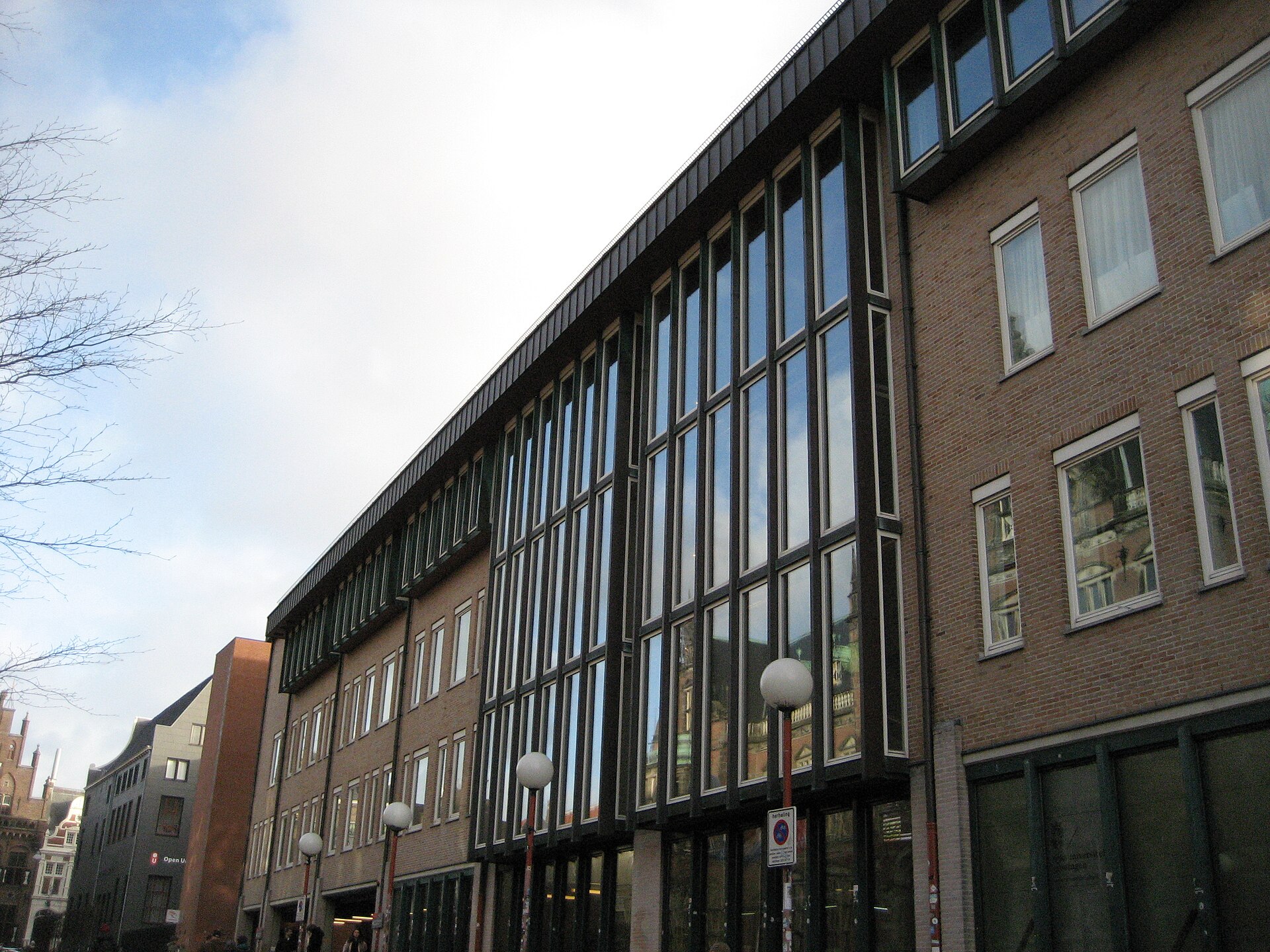
The University Library, usually called the UB, is the strongest default for a long individual session: it has structured study zones, reliable academic facilities and about 2,200 study places across the University Library system. The city-centre building is at Broerstraat 4, opposite the Academy Building, so it also works well between classes in the old centre.
Regular opening hours currently published by the University of Groningen are 09:00–22:00 from Monday to Thursday, 09:00–20:00 on Friday and 10:00–20:00 at weekends. The Library Support Desk normally closes at 17:00 on weekdays, so a building that is open does not necessarily offer full staff support. Holiday and examination schedules override the regular pattern; check the official UB address and opening-hours page on the day of a late session.
Outside designated UG-only periods, ordinary study places are generally accessible without a reservation, although users still pass through the access gates with the appropriate card. Studios for one or two people and group studios require a booking through the UB App. The Medical Library follows a different rule: its study places always require a reservation. Do not treat “University Library” as one identical access system across every location.
Put the 2026–2027 UG-only dates in the calendar
During four examination periods, the UB City Centre is reserved for University of Groningen students and staff, and a study-place reservation is mandatory. The university currently lists these dates for the 2026–2027 academic year:
- 12 October–4 November 2026;
- 4–27 January 2027;
- 15 March–7 April 2027;
- 31 May–23 June 2027.
During these periods, the published city-centre opening window is 08:30–00:00, but a long day is useful only if you have both a valid UG card and a reservation. Hanze students and most other visitors should use an alternative rather than travelling to the entrance and hoping for an exception. Dates can be amended, so use the university’s live UG-only page as the final authority.
- Check whether the date falls in a UG-only period.
- Reserve the correct location and time through the official system.
- Save the confirmation where it remains available without mobile data.
- Bring the physical university card; a screenshot is not a replacement.
- Cancel immediately if the plan changes so the place becomes available again.
Use Zernike when the timetable is already there
The UG’s Zernike Self-Service library is on the second floor of the Duisenberg Building, Nettelbosje 2. It holds compulsory literature for Economics and Business, Spatial Sciences, and Science and Engineering, as well as book collection and return facilities. Access requires a UG card and there are no library staff on site. The opening time follows the Duisenberg Building, so verify the current building schedule on the UB Zernike page instead of assuming that the city-centre timetable applies.
For Hanze students, the Hanze Library at Zernikeplein 7 is a separate and often more appropriate option. It currently lists 60 study places and regular hours of 09:00–20:00 Monday to Thursday and 09:00–17:00 Friday, with weekend closure. Check the Hanze Zernike Library page for changes during holidays and examinations.
Zernike makes practical sense before, between or after campus classes. A special journey from the city centre for a two-hour reading block may not. Calculate the full trip, including bicycle parking and the walk through a large campus building, then compare it with the time gained by using a closer public space.
Keep the other Hanze locations in reserve
Hanze operates several libraries, and the nearest one may be more useful than the largest. Wiebenga Library is at Petrus Driessenstraat 3 and currently opens 09:00–17:00 Monday to Friday. The Minerva Art Academy Library, at Gedempte Zuiderdiep 158, publishes the same weekday hours. Both are closed at weekends under their regular schedules.
Access, holiday hours and the suitability of individual areas can vary by institution and building. Use the Hanze Library directory to confirm the location that belongs to your programme. A campus card, an open building and an available library desk are three different facts; verify all three before building an examination-day plan around them.
For a change of energy: Forum Groningen
Forum Groningen at Nieuwe Markt 1 works when you need a public, creative atmosphere rather than monastic silence. Open spaces are freely accessible, with study and reading areas distributed through a building that also contains cinemas, exhibitions, cafés and events. The non-fiction collection on the eighth floor can suit reading, while other floors are better for lighter work. Because activity changes by floor and time, bring headphones and be willing to move once rather than fighting the room.
The Forum currently lists building hours of 09:00–00:00 Monday to Saturday and 10:00–23:00 Sunday. Entry doors close earlier: 22:00 Monday to Thursday, 23:00 Friday and Saturday, and 21:00 Sunday. Some accessible and study areas also close during the evening, so “the building closes at midnight” does not guarantee that a particular table remains available. Check the live Forum opening-hours page before a late session.
Use the building as it is intended. Tables marked “this is not a study place” are reserved for other visitors, outside food is not permitted, and calls or online meetings should not disturb the people nearby. The Forum advises cyclists to use the free guarded bicycle facility under Nieuwe Markt, which is open 24/7. The rooftop is a good real break, but it closes at sunset according to a seasonal schedule; treat access as a bonus, not the centre of the study plan.
Use neighbourhood libraries as daytime backups
A smaller library can remove the search for a central desk, especially when you live north or south of the centre. Forum Library Selwerd is at Eikenlaan 288/8, while Forum Library De Wijert is at Van Lenneplaan 10. Both currently publish regular hours of 08:30–17:30 Monday to Friday and 10:00–15:00 Saturday, with Sunday closure.
These branches are public community spaces, not dedicated silent university reading rooms. Children’s activities, language sessions or local events can change the sound level and available tables. Check the individual Selwerd or De Wijert page for holiday closures and activities, then use the branch for reading, planning or a compact writing block rather than assuming every facility needed for an eight-hour day will be present.
On a first visit, test four things before unpacking completely: chair comfort, power access, the expected sound level and the closing time. If two are wrong for the task, change location early. Staying because you have already cycled there is not a study strategy.
For reading and reset: use the city around you
Noorderplantsoen, a courtyard or a quiet bench can work for printed reading, flashcards and outlining in dry, mild weather. Outdoor study is poor for confidential material, long laptop work, strong wind or any task that depends on power and stable internet. Bring only the pages you can realistically finish and use a short outdoor block as a defined part of the day.
A calm café outside the lunch rush can also support low-intensity work. Check the venue’s policy, buy something, keep the table footprint small and leave when the room becomes busy. One drink does not purchase a four-person table for an afternoon. Never conduct a confidential call over documents that neighbouring customers can see or hear.
The best study spot is not a permanent identity. Use silent rooms for difficult work, social spaces for administration and group tasks, and outdoor time to make breaks feel different from scrolling at the same desk.
Match the room to the work
A good study day uses different environments for different cognitive jobs. Put demanding reading, calculations and original writing in the quietest block, then move to a more social space for planning, references or group discussion. Changing location can reset attention, but crossing the city every hour becomes another form of procrastination. Two purposeful locations are usually enough.
| Task | Best environment | Poor match |
|---|---|---|
| Dense reading or calculations | Silent university-library zone | Busy café or event floor |
| Essay drafting | Quiet desk with power and a defined end time | Outdoor bench in uncertain weather |
| Group discussion | Reservable studio or conversation-permitted zone | Silent reading room |
| Email, planning and references | Forum or neighbourhood library | A scarce specialist workstation |
| Flashcards or printed revision | Park, courtyard or short café session | A cross-city journey for a premium desk |
| Confidential online appointment | Private booked room | Open public table |
Write one visible outcome before opening the laptop: “annotate pages 30–50,” “solve questions 1–12” or “draft 600 words.” “Study economics” is too broad to tell you when the session has worked. Choose the room after defining the outcome, not before.
Build one realistic study day
- The evening before: check opening hours, access restrictions and reservations. Download the readings and pack the correct charger.
- 09:00–11:00: complete the hardest individual task in a quiet location. Keep the phone out of reach and write questions on paper instead of interrupting the block to search every detail.
- 11:00–11:20: leave the desk, drink water and walk. Take valuables with you and follow any local absence rule.
- 11:20–13:00: finish the second demanding task or convert notes into an outline.
- 13:00–14:00: eat in a permitted area. Do not turn a library desk into a lunch table when the rules direct food elsewhere.
- 14:00–16:00: move once—to the Forum, a faculty space or a neighbourhood library—for references, emails and lower-intensity work.
- 16:00: write the next action for tomorrow, pack the desk completely and leave. An extra tired hour is optional; the defined output is not.
This schedule is a template, not a productivity contest. Shorten the blocks for classes, disability needs, medication, caring work or employment. Consistency comes from a plan you can repeat, not from copying somebody else’s longest library day.
Treat reservations as shared capacity
Reserve only the location and time you can use. Read the confirmation carefully: a studio booking, an ordinary study-place reservation and access to the building are not interchangeable. During UG-only periods, the University of Groningen directs students to reserve study places through its official system; studios remain separately bookable through the UB App.
Arrive on time, check in when required and release the place as soon as plans change. Do not reserve speculative blocks at several locations. If a break becomes longer than the local absence allowance, take your belongings and free the desk. A laptop or jacket is not a fair claim on a scarce place for the afternoon.
- Use one chair and keep adjacent seats free of bags.
- Move calls to an area where conversation is permitted.
- Leave accessible furniture available when you do not need its features and other seats exist.
- Report broken sockets, lights or furniture through the building’s official route.
Pack for the location you actually chose
A small repeatable kit prevents unnecessary journeys: charged laptop, correct charger, headphones, water bottle, university card, any reservation confirmation and one permitted snack for the designated break area. The UB house rules allow water bottles and coffee cups in most of the building but exclude the Special Collections room; Forum does not allow food brought from outside. Check the location’s rules instead of applying one building’s policy everywhere.
Download essential readings and save a local copy of the task list. Public Wi-Fi, cloud services and power sockets can fail or be busy. For a three-hour session, arrive with enough battery to complete the defined task without treating a particular socket as guaranteed.
Keep medication, accessibility equipment and valuables with you. If desk height, lighting, lift access or sensory conditions matter, consult the venue’s accessibility information before travelling and contact staff when the published page does not answer the practical question.
Use an exam-week fallback ladder
Do not make one famous building the single point of failure. Choose a first option, one nearby institutional alternative and one public backup before the busy period starts. The alternatives should have different access dependencies: two UG buildings may both be affected by the same card or holiday schedule, while the Forum or a neighbourhood library follows a different system.
- Primary: a reserved UB place or the faculty space nearest your first class.
- Secondary: the correct Zernike or Hanze facility for your institution.
- Public backup: Forum Groningen or a neighbourhood library during its published hours.
- Home block: downloaded material and one task that needs no campus equipment.
Check occupancy information in the UB App before leaving, but treat it as a planning signal rather than a promise that your preferred chair will remain empty. If the first location is full, move to the next decision immediately instead of waiting in a corridor and repeatedly refreshing the same screen.
Review the result, not the atmosphere
At the end of three visits, note arrival time, noise, access, available power, travel time and the work completed. A beautiful room that produces forty minutes of work after a thirty-minute journey may be a poor weekday choice. A plain faculty table that lets you finish before class may be excellent.
Keep one location for high-focus work, one for flexible daytime work and one backup. Recheck the official pages before examinations and holidays because access windows, reservations and closures change. The best Groningen study system is not a ranked list of photogenic places; it is a small network that still works when the first table is unavailable.
- Write the session goal before opening a browser.
- Pack water, headphones, the correct charger and the required card.
- Use calls only in spaces where conversation is permitted.
- Take belongings with you when a break exceeds the local rule.
- Release every reservation you will not use.